578.9K
Downloads
953
Episodes
A weblog and podcast featuring vintage broadcasts directly transferred from original transcriptions.
Episodes

Sunday Dec 19, 2010
Sunday Dec 19, 2010
Here's my Christmas gift to you. Or, at least some of you that are fans of the acerbic wit of Henry Morgan. Henry Morgan was a bit ahead of his time with his cynical comedy that would later flower with comedians like Bob and Ray and publications such as Mad magazine. Morgan got his start with a quarter hour stream of consciousness comedy show on Mutual where he was famous for skewering sponsors and poking fun at the conventions of radio. There's only a few episodes floating around of Morgan's fifteen minute show, even though Goldin lists several as being in existence - many from the Mutual run from 1941-42 and only two when the show was carried on ABC in 1945-46. Here's a previously lost episode of Morgan's work that I've not seen documented elsewhere, originally heard on June 10, 1946 on ABC and originating at WJZ, New York. The show dates from just a few months before Morgan would start a half-hour comedy-variety series on ABC. (You can hear several episodes from the run at archive.org and I posted an AFRS version of one episode a few months ago in the blog.) In the show, Morgan pokes fun at Walter Winchell, takes us inside the mind of a landlord, referencing wartime rationing and shortages, and comments on the recent film "Cluny Brown" and Orson Welles's doomed Broadway musical version of "Around the World in 80 Days". The commercials include Gallo Wine, Esquire boot polish and Topps chewing gum. This episode of "Here's Morgan" appears to have survived because it was transcribed - the disc is part of a recent purchase I made of odd test discs and "throwaways" from various stations from a private collection. So, it can pay off to carefully go through stacks of odd discs like this from local stations. If you would like to know a bit more about Henry Morgan, WFMU has an extensive blog entry appreciation of Morgan's work. And here's a profile of Morgan from the April 14, 1947 edition of Life magazine that includes some great photos, including the famous "praying to the razor" shot that got him in trouble with his sponsor, Eversharp. (The ads interspersed with the article, by the way, are just a wonderfully funny as Morgan's parodies and include one featuring Senator Claghorn from the "Fred Allen Show".) There's no scan on this transcription since there's no label - just a very light grease pencil notation on the label reading "Morgan" and "6-10-46" on the signle sided lacquer.
Sunday Nov 14, 2010
Sunday Nov 14, 2010
Here's a fun little episode of "The Eddie Cantor Show", originally broadcast on NBC on February 20, 1946. The first tune on the show is Eddie's rendition of "Onesy, Twosey" and, in the main comedy sketch, Eddie inherits a South American plantation from his grandfather.
Thursday Oct 21, 2010
Thursday Oct 21, 2010
In this post, another program from the same 70s era reel to reel that gave us "The Jack Webb Show". It's an episode of "The Bob and Ray Show" carried on the NBC radio network after their successful late 40s series on WHDH in Boston. I think, based on internal references in the program, that the show originally aired around January 1951 1952. It includes Bob and Ray's Christmas tree warehouse sale and "Mr. Trace, Keener Than Most Persons" solving "The Broken Sweep Second Hand on the Wristwatch Murder Clue". Perhaps a Bob and Ray expert out there could say if it's in circulation in digital form - I wasn't able to find a copy of it online from the usual suspects. Update: A comment from Dr. OTR (click the "Comments" link below) convinces me this is probably from January 1952. My mistake ... Please update the name of the file after you download it from the site.
Thursday Oct 21, 2010
Thursday Oct 21, 2010
Well, some of you seemed to be amused and curious about "The Jack Webb Show" that I posted a couple of weeks ago and want to hear more of the "Dragnet" star's little known comedy series he did for ABC before hitting it big with his crime drama. The program of April 17, 1946 includes the winner of the "How to Get 'The Jack Webb Show' Off The Air" contest. The show is sustained and originated in San Francisco. This was the fifth program in the series. Only this episode and the one I posted earlier exist in the series. They're currently in circulation, but this is a fresh dub from a 70's era reel to reel tape in excellent condition, so it should be a bit of a sound upgrade. Wish I had more - it's fascinating to hear Webb is such a free-form sketch comedy show.
Monday Oct 04, 2010
Monday Oct 04, 2010
This show is floating around in mp3 format, but I've made a fresh transfer of it from an original 70s era early generation reel to reel tape of the program. If you've not heard it before, you're in for a surprise. It's a sketch comedy show. And, yes, it features _that_ Jack Webb. Originating in San Francisco and possibly carried on ABC's Pacific network, "The Jack Web Show" from April 10, 1946 includes sketches such as "Facts on Parade" and a private-eye spoof called "The Razor". If you like this transfer, let me know and I can post the other existing episode of the series in the blog dubbed from the same tape.
Tuesday Sep 28, 2010
Tuesday Sep 28, 2010
Here's another one of those very early programs in the long-running public service series "Guest Star", featuring famous guests giving us a bit of entertainment as they pitch US Savings Bonds.

Thursday Aug 19, 2010
Thursday Aug 19, 2010
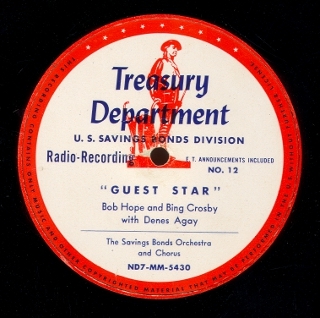
Finally this week, a hard to find early entry in the long running, star-studded Treasury Department public service series, "Guest Star". Program 12 in the series features Bob Hope and Bing Crosby along with host Kenny Delmar and Denes Agay and the Savings Bond Orchestra and Chorus. Agay and the Orchestra kick off the show with "After You've Gone". In the Hope and Crosby segment, the guys crack jokes about each other and savings bonds while Hope plugs his new movie, "My Favorite Brunette". The side is dated April 10, 1947 in the matrix, so I'm assuming that's the date the master for the show was recorded.
Thursday Aug 19, 2010
Thursday Aug 19, 2010
Did you know that the Glinda, the Good Witch from "The Wizard of Oz", had her own sitcom on radio?
Saturday Jul 10, 2010
Saturday Jul 10, 2010
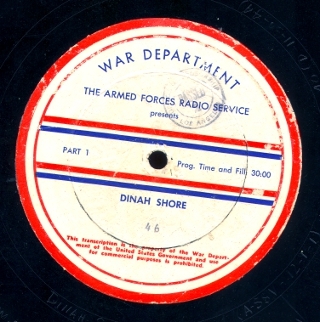
It's been awhile since we heard from the charming Dinah Shore, so let's give one of her fun shows a spin.
Friday Jun 18, 2010
Friday Jun 18, 2010
I'm pleased to offer up on the blog an episode of "The Henry Morgan Show", a kind of hard to find series. Morgan had a difficult relationship with his sponsors in the radio era, often very pointedly satirizing their products on his show. You might think of him as a more mean spirited Fred Allen. Gerald Nachman, author of "Raised on Radio" noted, "If Fred Allen bit the hand that fed him, Henry Morgan tried to bite off the whole arm."